
ZLD Water Treatment Project for EV Battery Tray Manufacturing
Electric vehicle manufacturing brings water management decisions into the production line. A December 2023 report from La Voix du Nord described how the Minth–Renault joint venture in Ruitz, France, invested €300,000 in treating and recirculating water used to clean battery trays. For manufacturers evaluating automotive wastewater treatment, the example shows why process water reuse deserves attention alongside production capacity.

What the Ruitz report tells us about this ZLD project with MVR
The newspaper reported that the battery-tray assembly operation used water at its cleaning station and had installed a treatment station to return that water to the process. The report also described an intended production target of 300,000 trays and 280 employees by the end of 2025. These were targets reported in 2023, rather than verified current operating figures.
Battery trays are structural housings for EV batteries. Their manufacturing and cleaning processes should be assessed separately from battery-cell production, which can involve different wastewater characteristics and water demands.
Why cleaning water needs ZLD treatment before reuse
Depending on the process, automotive component cleaning water may contain oils, suspended particles, cleaning chemicals and dissolved contaminants. Returning untreated water to a washing line can allow contaminants to accumulate and affect cleaning quality. A reuse system therefore needs to control water quality against the requirements of the actual cleaning stage.
The starting point is a wastewater analysis and a process water balance. Flow rate, pH, conductivity, suspended solids, oil and grease, organic loading and relevant metals help determine which treatment steps are needed. Manufacturers must also establish the acceptable quality of reused water and account for sludge, concentrates, evaporation losses and make-up water.
How YASA ET ZLD technologies can support water reuse
YASA ET offers treatment technologies that can be evaluated for automotive cleaning wastewater. The appropriate combination depends on the contaminants present, the required reuse quality and the operating conditions. The options below describe possible applications; they are not a description of the equipment installed at Ruitz.
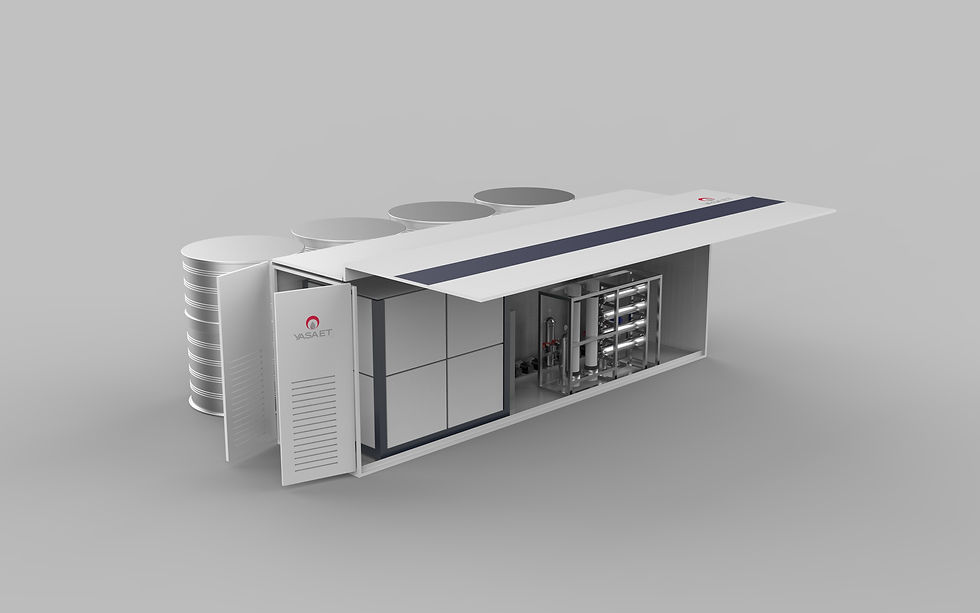
PREDEST electrocoagulation for pretreatment
PREDEST® electrocoagulation can be assessed for removing suspended contaminants and destabilizing emulsions. Electrochemically generated coagulants help form flocs, which must then be separated by flotation, settling or filtration. Testing is needed to establish electrode selection, operating conditions and the resulting sludge load. Electrocoagulation alone does not reliably remove all dissolved salts or organic compounds.
SOLIDEST heat pump vacuum evaporation
For suitable smaller wastewater streams, SOLIDEST® heat pump vacuum evaporators separate water by evaporation and condensation, leaving a concentrated residual stream. This can support water recovery where dissolved contaminants limit direct reuse. Distillate quality must be checked: volatile compounds and carryover can affect whether polishing is required before returning water to the cleaning process.
EVADEST MVR mechanical vapor recompression
EVADEST® uses mechanical vapor recompression to recover heat from generated vapor and reuse it in the evaporation process. It can be evaluated for larger evaporation duties and wastewater concentration. Selection requires assessment of energy demand, fouling, corrosion, feed variability and the management of the remaining concentrate.
Designing a practical ZLD recycling system
A possible treatment sequence begins with collection and equalization, followed by contaminant removal, solids separation and the water recovery or polishing stages needed for reuse. Evaporation may be appropriate for a concentrated side stream rather than the full circulation flow. Separating cleaner rinses from heavily contaminated streams can also reduce the treatment load.
Monitoring should verify that recovered water remains suitable for the washing process. Conductivity, pH and other indicators should reflect the contaminants and cleaning chemistry involved. Treatment performance must be evaluated alongside cleaning quality, maintenance needs and residual waste disposal.
Closed loop reuse and zero liquid discharge
The Ruitz report describes cleaning water recirculation, but provides no measured recovery rate, water analysis or detailed treatment specification. It should not be used as evidence of a verified zero liquid discharge system. Water recirculation and zero liquid discharge are different claims: a ZLD design must address every wastewater outlet and provide a route for concentrates and solids.
The commercial case for reuse depends on the complete operating balance. Potential reductions in water purchases and wastewater disposal must be weighed against electricity, consumables, maintenance and residual waste costs. The newspaper’s €300,000 figure is a historical investment reported for that facility, not a YASA ET equipment price or a benchmark for another project.

Discuss your automotive ZLD wastewater project with YASA ET
If your facility is evaluating EV battery tray cleaning water recycling, share the wastewater analysis, daily volume, operating hours and required reuse quality with YASA ET. Our team can assess where PREDEST®, SOLIDEST® or EVADEST® may fit into a treatment concept and identify the testing needed for equipment selection.
Source acknowledgement: This article is an original YASA ET industry commentary based on the supplied copy of La Voix du Nord’s report by Pierre-Louis Curabet Pawlak, with photographs by Ludovic Maillard, published on 12 December 2023.


Comments