top of page

A collection of Resources, News and Technologies from the Water and Wastewater Treatment Industry
Search


Breaking the Bottleneck of Industrial Waste Salt Resource Utilization: From "Waste" to "Wealth"
In the field of environmental protection, Zero Liquid Discharge (ZLD) technology has become a symbol of innovation and strength, drawing widespread attention.
Application of Vacuum Evaporators in Electroplating Wastewater Treatment
The electroplating industry generates significant volumes of wastewater containing hazardous heavy metals such as hexavalent chromium, nickel, and zinc. Traditional treatment methods often struggle to achieve complete resource recovery and zero liquid discharge (ZLD).


How Microorganisms Remove COD in Wastewater: A Complete Guide
COD in wastewater, short for Chemical Oxygen Demand, is one of the most important indicators of organic pollution in both domestic and industrial effluents. But how is this pollution removed efficiently and sustainably? The answer lies in nature’s tiniest engineers: microorganisms.
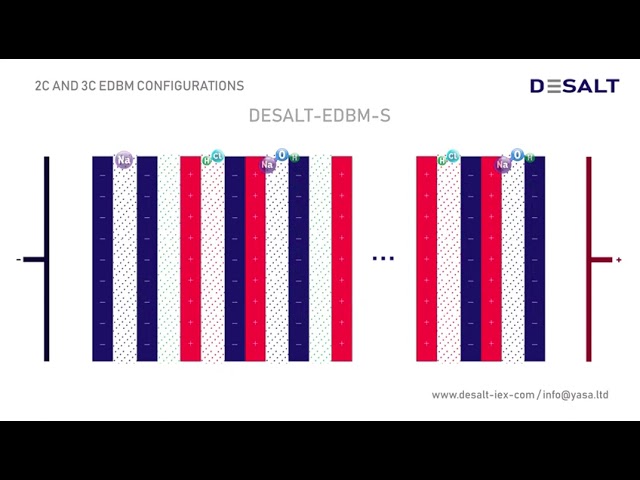
Different Configurations of Bipolar Membrane Electrodialysis (EDBM)
Bipolar Membrane Electrodialysis (EDBM) is an advanced membrane separation technology that utilizes an electric field to split water molecules into H⁺ and OH⁻ ions, enabling the conversion of salt solutions into their corresponding acids and bases.


Advanced Electrodialysis Membranes: The Future of Water Treatment
Water scarcity affects over 2 billion people worldwide, posing a significant threat to agriculture, health, and industry. We may have technological remedies like desalination and wastewater recycling, but they require breakthroughs to truly scale sustainably. Enter electrodialysis (ED)—a powerful separation method—and, at its core, the cutting-edge advanced membranes that enhance selectivity, durability, and efficiency.

How to Improve Electrodialysis Membrane Durability
Electrodialysis (ED) is a membrane separation process that uses electrical potential to drive the movement of ions through ion-exchange membranes. It's widely used in desalination, industrial wastewater treatment, and food processing. Unlike traditional filtration, ED is energy-efficient and highly selective in removing charged particles.
bottom of page